
If you’re in Tampa and face real lawsuit or business-risk exposure, an offshore asset protection trust can add a legal “moat” by placing assets under a licensed foreign trustee and jurisdiction that won’t simply follow local judgments. It’s legal when you fund it early, document a legitimate purpose, and stay current on U.S. tax and reporting rules. Expect $15,000–$40,000 to set up, plus $5,000–$15,000+ yearly, usually for $250,000–$500,000+ in assets. Next, you’ll see when it’s worth it, the tradeoffs, and common pitfalls.
Key Takeaways
- Offshore asset protection trusts can legally shield assets from creditors by placing them under a foreign trustee beyond most U.S. court reach.
- They work best for Tampa residents with high lawsuit exposure, contract disputes, personal guarantees, or divorce-risk assets needing extra creditor deterrence.
- Timing matters: fund the trust well before claims arise to avoid fraudulent transfer challenges and court-ordered clawbacks.
- Expect higher cost and complexity: roughly $15,000–$40,000 setup and $5,000–$15,000+ annually, often justified above $250,000–$500,000 assets.
- Compliance is non-negotiable: full U.S. tax/reporting, reputable banking, and independent trustees; missteps can trigger penalties and perception issues.
What is an offshore asset protection trust—and how does it work in plain English?
If you’re worried about lawsuits, creditors, or a future business fallout, an offshore asset protection trust is a legal structure that moves certain assets into a trust administered in a foreign jurisdiction so they’re harder to reach through U.S. courts—while you still set the rules up front for how and when your beneficiaries can benefit.
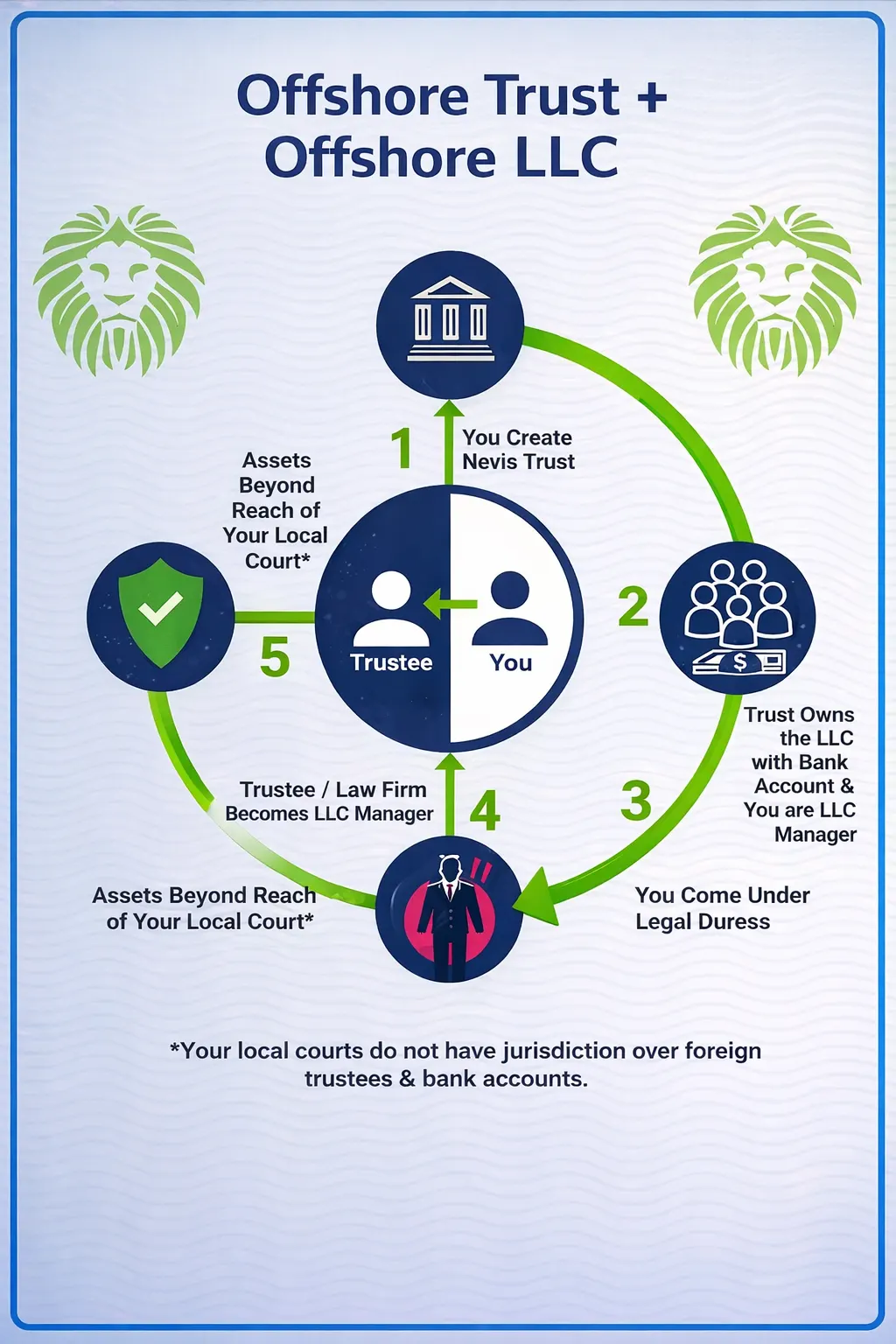
You transfer assets to the trust, name a foreign trustee, and keep control through written terms, a protector, and clearly defined distribution standards.
If a claim arises, the trustee follows the trust’s rules, not a local judgment.
That’s the essence of offshore asset protection trust tampa fl strategy within asset protection planning florida.
Are offshore asset protection trusts legal for Tampa, FL residents (and what makes them “legit”)?
Offshore asset protection trusts can be legal for Tampa, FL residents, but only when they’re set up and funded for lawful planning—not to hide assets, dodge taxes, or outrun a known creditor.
To keep it “legit,” you’ll document a clear, non-fraudulent purpose, fund the trust before trouble arises, and comply with U.S. reporting and tax rules.
You’ll use an independent foreign trustee, real administration offshore, and credible banking/custody.
An offshore asset protection trust example is a properly disclosed trust holding marketable securities.
Expect offshore trust cost to reflect legal drafting, trustees, and ongoing compliance.
When does an offshore trust actually make sense vs a Florida-based alternative?
When does it actually make sense to add an offshore layer instead of relying on a strong Florida plan?
You consider it when your risk profile is unusually high: you face frequent contract disputes, personal guarantees, professional liability, or a credible threat of out-of-state judgments.
It can also fit when you need offshore trust divorce protection for assets you’re willing to segregate and govern tightly.
In a domestic asset protection trust vs offshore comparison, go offshore when you’re prioritizing creditor deterrence and jurisdictional complexity over relying on Florida exemptions, LLC structuring, and insurance.
Timing matters: you implement before trouble starts.
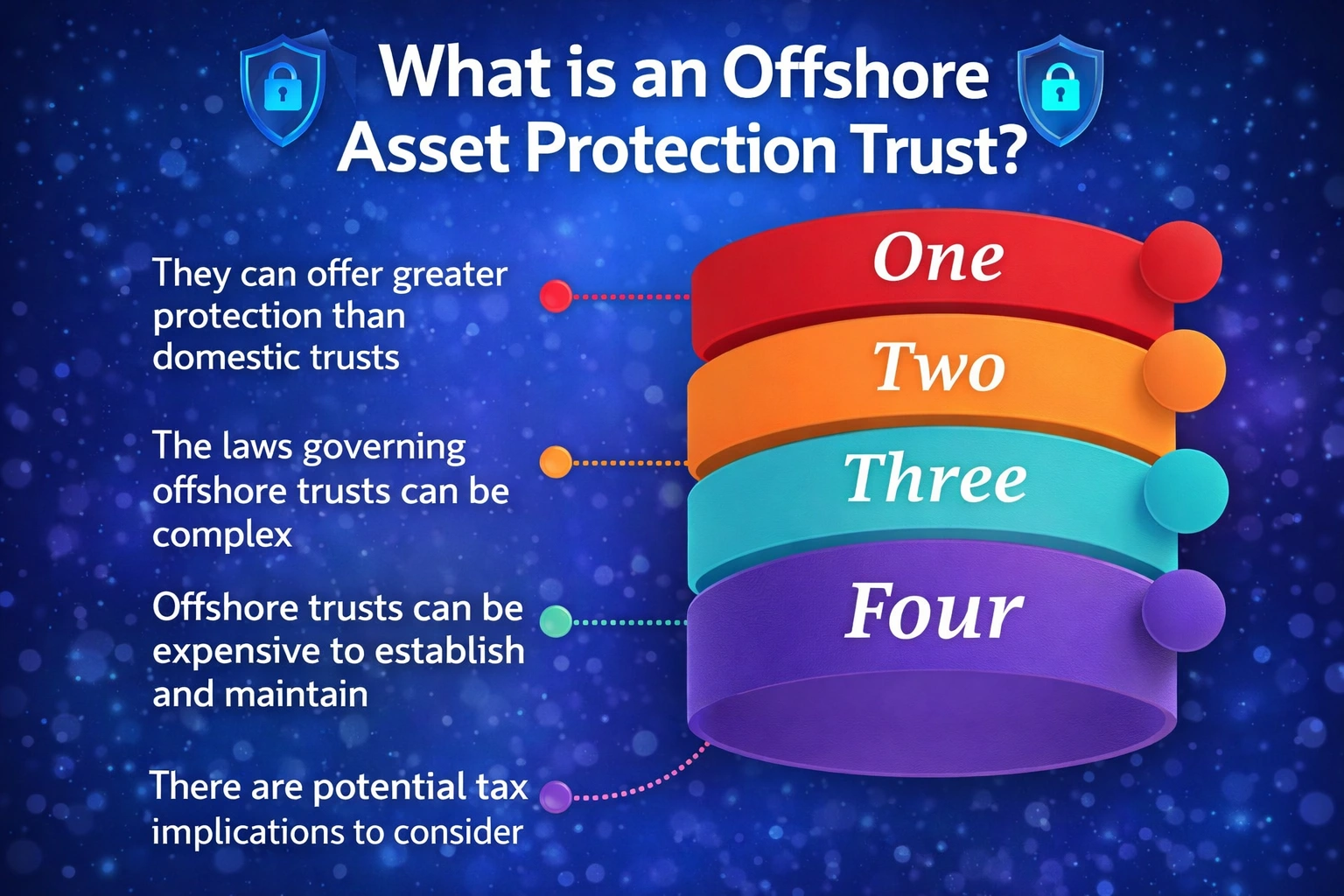
What are the biggest disadvantages of an offshore trust (cost, control, compliance, and optics)?
Although an offshore asset protection trust can add real advantage against aggressive creditors, you pay for that advantage in four predictable ways:
- higher upfront and ongoing costs,
- less day-to-day control over assets,
- heavier compliance and reporting obligations, and
- optics that can complicate litigation, banking, or even family interactions.
You’ll answer to an independent foreign trustee, so you can’t treat trust assets like a personal checking account.
You must meet offshore trust reporting requirements and keep records tight, or penalties can follow.
Timing matters: transfers made too late can trigger a fraudulent transfer / creditor lookback and unwind protection.
Expect extra scrutiny from counterparties.
How much money do you need to open an offshore trust, and what does it cost to maintain?
Those added costs and compliance burdens usually lead to the next question: what’s the minimum it takes to set up an offshore trust, and what’ll it cost you each year to keep it running?
In practice, you’ll usually want at least $250,000–$500,000 in assets, otherwise the fixed fees can outweigh the protection.
Typical setup ranges from $15,000–$40,000, depending on complexity, U.S. tax coordination, and whether you pair it with a domestic layer.
Ongoing maintenance often runs $5,000–$15,000+ annually for trustees, filings, accounting, and oversight—especially with an offshore trust cook islands structure.
Which jurisdictions are commonly used (Cook Islands, Nevis, etc.)—and how do you choose responsibly?
Before you pick a place like the Cook Islands or Nevis, you need to treat jurisdiction selection as a risk-management decision—not a marketing checklist—because the local statutes, court procedures, and trustee infrastructure will determine how hard it’s for a creditor to reach your trust assets and how smoothly you can keep the trust compliant from Tampa.
Common options include a cook islands trust, Nevis, Belize, and Cayman. You’ll choose responsibly by vetting political stability, trustee licensing, reporting rules, banking access, and how quickly local courts hear urgent applications.
You also want credible trustees, audited providers, and clean onboarding to support your best offshore asset protection trust.
Can an offshore trust protect assets from lawsuits, creditors, or divorce—and what are the limits?
Picking the right offshore jurisdiction sets the playing field, but the real question is what the trust can actually do for you when a lawsuit hits, a creditor presses, or a divorce turns adversarial.
Properly funded and run, an offshore trust cook islands structure can raise the cost and complexity of collection, often requiring a new foreign action and higher proof standards.
You gain advantages and time, not immunity. Courts can still order you to repatriate, treat transfers as fraudulent, or enforce support obligations.
Divorce outcomes depend on timing, marital-property rules, and control signals. The best offshore asset protection trust works when you follow formalities and plan early.
What are the most common offshore trust mistakes (and how do Tampa families avoid them)?
Even if you choose a strong jurisdiction, most offshore trust failures happen because the trust is set up or operated in a way that hands creditors—and courts—an easy target.
You weaken protection by funding too late, keeping “too much” control, commingling personal and trust accounts, or treating trustees as nominees.
You also invite attacks by sloppy records, inconsistent tax reporting, and ignoring U.S. court orders that trigger contempt influence.
Tampa families avoid these mistakes by planning early, documenting solvency, using an independent foreign trustee, following strict distributions, and coordinating Florida counsel.
Done right, an offshore trust cook islands can be the best offshore asset protection trust.
Frequently Asked Questions
How Long Does It Take to Set up an Offshore Asset Protection Trust?
You can typically set up an offshore asset protection trust in 2–6 weeks, but complexity, due diligence, and banking can extend it to 2–3 months. You’ll move faster if you gather documents and clarify goals early.
Will an Offshore Trust Affect My Ability to Get a Mortgage or Business Loan?
Yes, it can. Lenders may treat assets in an offshore trust as unavailable collateral and scrutinize disclosures, liquidity, and control. You’ll reduce friction by documenting trustee powers, funding sources, and complying with reporting.
Do I Need to Disclose an Offshore Trust During Florida Probate or Guardianship Proceedings?
Yes—you often must disclose it if it affects the estate, ward, or your fiduciary duties. You can’t hide assets from courts. You should coordinate counsel, file required schedules, and seek protective orders for confidentiality.
Can I Use an Offshore Trust to Hold Cryptocurrency or Private Equity Interests?
Yes—you can, but you must structure it carefully. You’ll transfer crypto via controlled wallets and assign private equity interests subject to transfer restrictions. You’ll also handle U.S. tax reporting, AML, and valuation compliance.
What Happens to My Offshore Trust if I Move Out of Florida?
If you move out of Florida, your offshore trust usually stays intact, but you must reassess governing law, trustee jurisdiction, tax residency, and reporting. You’ll update documents, powers, and successor trustees to avoid enforceability gaps.
Conclusion
If you’re in Tampa and carry real liability exposure, an offshore asset protection trust can strengthen your defense by shifting certain assets under foreign law and raising the cost of pursuing you. But it’s not a magic shield. You’ll pay more, give up some control, follow strict tax/reporting rules, and you must plan early to avoid fraudulent transfer claims. Use it when your risk and net worth justify the complexity—and coordinate it with Florida tools and counsel.