Estate planning for a blended family in Wesley Chapel, FL helps you protect your spouse, provide for your children, and avoid Florida intestacy rules that may not reflect your wishes. You’ll need to coordinate wills, trusts, and beneficiary designations carefully, especially because stepchildren usually don’t inherit unless you plan for them. Tools like QTIP or AB trusts can balance support and inheritance. Regular updates after life changes also matter, and the next sections explain how to make those choices clearly.
Key Takeaways
- Without an estate plan in Florida, intestacy laws may divide assets in ways that conflict with blended family wishes.
- A clear plan can support a surviving spouse while preserving inheritance for children from prior relationships.
- Stepchildren usually do not inherit under Florida intestacy unless adopted, so wills and trusts should state your intentions clearly.
- Trusts such as QTIP, AB, and revocable living trusts can help balance control, support, and protection for all beneficiaries.
- Beneficiary designations on retirement accounts and insurance policies should be reviewed regularly, since they can override wills and trusts.
Why Is Estate Planning Different and More Complex for Blended Families?
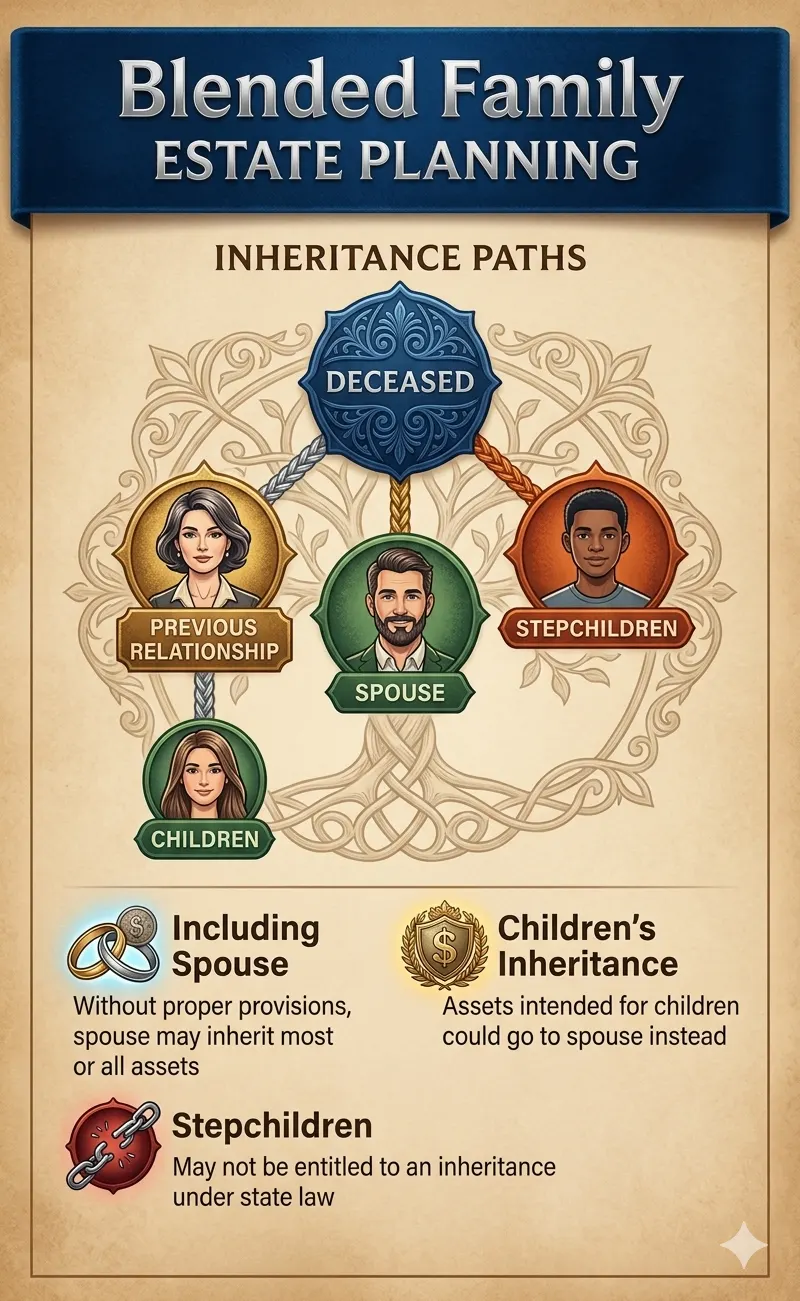
If you die without an estate plan in Florida, state intestacy laws decide who receives your assets, and those rules may not match your wishes for a blended family.
A surviving spouse and children from a prior relationship can have competing legal interests, even when everyone wants a fair result.
Because of that, you need a clear plan to protect your spouse, provide for your children, and reduce the risk of confusion later.
What happens to your estate in Florida if you die without a blended family plan?
Why does this matter so much for blended families in Florida? If you die without a plan, Florida’s intestacy laws decide who inherits.
Your spouse may share assets with your descendants, while stepchildren usually inherit nothing unless you’ve adopted them. That can create blended family inheritance issues.
Thoughtful estate planning for blended families helps you protect relationships, reduce confusion, and honor everyone you love.
How Do You Split an Estate Fairly in a Blended Family Between a Spouse and Children from a Prior Marriage?
You won’t find one standard formula for dividing an estate fairly in a blended family, because fairness depends on your relationships, obligations, and goals.
In a second marriage, you often need to balance your spouse’s financial security with your children’s inheritance in a way that’s clear and practical.
A sound plan helps you define what’s fair for your family and reduces the risk of confusion or conflict later.
What is fair in a second marriage and estate planning? Is there a standard approach?
How do you define “fair” in a second marriage estate plan when a current spouse and children from a prior marriage may have different needs and expectations?
In estate planning for blended families, there’s no standard formula. You should match support, timing, and control to your family’s circumstances.
A thoughtful estate planning second marriage executor can reduce conflict and carry out your wishes faithfully.
How Can a QTIP Trust or AB Trust Protect Both Your Spouse and Your Children in a Blended Family?
Beyond a QTIP or AB trust, you may have other Florida trust options that fit your family’s goals more closely.
The right choice often depends on when you want assets distributed, how much control you want a surviving spouse to have, and how you want to protect children from a prior marriage.
As you review these trusts, you can focus on balancing support for your spouse with a clear plan for your children.
What other trusts work best for blended families in Florida and when does each apply?
Because blended families often include competing responsibilities, the right trust can help you support a current spouse without unintentionally disinheriting your children.
In Florida, estate planning strategies for blended families may include a revocable living trust blended family plan for flexibility, an irrevocable life insurance trust for liquidity, or a special needs trust when a loved one requires protected, ongoing support and care.
How Do You Protect Your Assets From a Stepchild’s Claim in Florida?
If you die without a will in Florida, your stepchildren usually don’t inherit under the state’s intestacy laws.
That said, the outcome can still affect your spouse, your children, and your broader estate plan in important ways.
If you want to control who receives your assets and reduce the risk of later disputes, you should put clear documents in place.
Do stepchildren have inheritance rights in Florida if there is no will?
When someone dies without a will in Florida, stepchildren generally don’t inherit under the state’s intestacy laws unless they were legally adopted by the deceased.
If you want clarity and peace for everyone you serve, address stepchildren inheritance rights florida through thoughtful estate planning for blended families.
You can use a will, trust, and beneficiary designations to express your wishes clearly and reduce misunderstandings.
Why Are Beneficiary Designations the Most Common and Costliest Mistake in Blended Family Estate Plans?
You may assume your will or trust controls everything, but IRAs, 401(k)s, and life insurance usually pass by beneficiary designation instead.
In a blended family, that means an outdated form can override the plan you intended for your spouse, children, or stepchildren.
If you review these designations carefully and coordinate them with the rest of your estate plan, you can reduce confusion and avoid costly results.
How do IRAs, 401(k)s, and life insurance interact with a blended family estate plan?
Why do beneficiary designations cause so many problems in blended family estate plans? Your IRA, 401(k), and life insurance usually pass by contract, not by will or trust.
In ira beneficiary blended family issues, outdated forms can unintentionally favor one household.
With estate planning for blended families, you should review primary and contingent beneficiaries carefully, coordinate accounts, and update them after marriage, divorce, births, and deaths.
What Is a Prenuptial or Postnuptial Agreement and Does a Blended Family Need One Before Estate Planning?
You can still create an effective blended family estate plan after the wedding, even if you didn’t sign a prenup.
A postnuptial agreement may help in some cases, but your plan can often move forward through clear wills, trusts, beneficiary updates, and coordinated legal guidance.
The key is to address your family’s goals carefully and early, so you can reduce confusion and protect the people you care about.
Can you still do effective blended family estate planning after the wedding without a prenup?
Even if you’re already married and never signed a prenup, effective blended family estate planning is still very much possible.
You can still use wills, trusts, beneficiary designations, and powers of attorney to protect your spouse, children, and shared goals.
In estate planning for blended families, thoughtful updates often matter more than timing, especially in second marriage estate planning florida matters.
What Are the Red Flags That a Blended Family Estate Plan Is Failing or Was Never Done Right?
If you haven’t reviewed your blended family estate plan in several years, that alone may signal a problem.
You should revisit it after major life changes, such as a marriage, divorce, birth, death, move to another state, or a meaningful change in assets or family relationships.
Regular reviews help you confirm that your plan still reflects your wishes and treats everyone as intended.
How often should a blended family update their estate plan — and what triggers a review?
How often should a blended family revisit an estate plan? Review it every three to five years, and sooner after marriage, divorce, birth, death, relocation, major asset changes, or conflict between beneficiaries.
In estate planning for blended families, prompt updates protect intentions and reduce strain.
An estate planning attorney for blended families Wesley Chapel can help you align documents, roles, and distributions.
Why Do Wesley Chapel Blended Families Trust Paul Monsanto for Their Estate Plans?
When you’re planning for a blended family, you need an estate plan that works with your financial accounts, not apart from them.
Paul Monsanto’s completion of all three levels of the CFA Program helps you address beneficiary designations, investment accounts, and overall planning in a coordinated, practical way.
That kind of informed alignment can help you reduce avoidable conflicts and better protect the people you care about.
How does Paul’s CFA designation help blended families coordinate estate planning with financial accounts?
One advantage of working with Paul J. is that his CFA training helps you align wills, trusts, and financial accounts with care.
You get clear guidance on estate planning considerations for blended families, including beneficiary designations and second marriage issues.
That coordination reduces unintended outcomes, supports the people you serve, and helps your overall plan reflect your family’s goals with greater precision.
Frequently Asked Questions
Can Stepchildren Inherit Automatically Under Florida Intestacy Laws?
No, your stepchildren don’t inherit automatically under Florida intestacy laws unless you’ve legally adopted them. You can provide for them through a valid will or trust, which helps you clearly honor your wishes and family.
Should Former Spouses Be Removed From Old Powers of Attorney?
Yes, you should usually remove former spouses from old powers of attorney, unless you intentionally want them serving. You can update documents promptly, avoid confusion, protect your wishes, and help your loved ones manage matters smoothly.
How Often Should Blended Families Update Their Estate Plan?
You should review your estate plan every three to five years and after any major life change. You’ll protect everyone more reliably when you update documents after marriages, divorces, births, deaths, relocations, or financial changes.
Can Digital Assets Be Included in a Blended Family Estate Plan?
Yes, you can include digital assets in your estate plan. You should list accounts, access instructions, and beneficiaries clearly, so you reduce confusion, protect loved ones, and help your family carry out your wishes smoothly.
What Documents Should Blended Families Bring to an Estate Planning Meeting?
You should bring prior wills, trusts, deeds, beneficiary designations, asset lists, insurance policies, business documents, prenuptial or divorce agreements, and guardianship papers. You’ll also want marriage certificates, children’s information, and questions about your family’s goals.
Conclusion
Estate planning for a blended family in Wesley Chapel calls for clarity, balance, and careful drafting. You can protect your spouse, provide for your children, and reduce the chance of conflict by addressing trusts, beneficiary designations, marital agreements, and asset ownership together. When your plan reflects your family’s real structure and goals, you stay in control of what happens next. With thoughtful legal guidance, you can create a plan that’s practical, fair, and built to last.