In Tampa, a will gives you basic instructions for who gets your property and who cares for minor children, but it doesn’t avoid probate or handle incapacity. A trust can help keep assets out of probate and add privacy, while a full estate plan ties everything together with powers of attorney, health care directives, and coordinated beneficiary choices. If you want to protect your family during life and after death, the right mix matters more than a single document.
Key Takeaways
- A will names beneficiaries and guardians, but it does not avoid probate or handle incapacity planning for Tampa families.
- A trust can help avoid probate, provide privacy, and manage assets more efficiently during incapacity or after death.
- A full estate plan combines a will, trust when needed, powers of attorney, and healthcare directives for broader protection.
- Beneficiary designations, joint ownership, and account titles can override a will, so coordination is essential.
- Florida families should regularly review estate documents to reflect life changes, legal requirements, and the right decision-makers.
What Is the Difference Between a Will and an Estate Plan?
While a will is one important estate planning document, an estate plan is the broader strategy that helps protect you, your assets, and your loved ones during life and after death.
In an estate plan vs will comparison, your will mainly directs property after death and names guardians.
Your estate plan can also address incapacity, beneficiary designations, powers of attorney, and healthcare choices.
Understanding will vs trust differences matters too, especially when avoiding probate Florida concerns arise.
A simple will vs complex estate plan depends on your family, assets, and goals.
An estate planning attorney Tampa FL can help you choose wisely.
Is It Better to Have a Will or a Full Estate Plan in Florida?
Often, the better choice in Florida is a full estate plan because it does more than a will alone can do. If you’re considering will vs estate planning, think about your family’s needs today and later. A complete plan can coordinate documents, decision-makers, and asset strategies clearly.
When you ask, do I need an estate plan or just a will, the answer often depends on complexity, privacy goals, and incapacity planning. Understanding trust vs will differences also helps.
In estate planning Tampa Bay, many families prefer broader protection despite possible disadvantages of estate planning, such as upfront cost, added decisions, and the need for updates.
What Does a Will Actually Cover — and Where Does It Fall Short?
What does a will actually do for you? A last will and declaration lets you name who should receive property in your sole name, nominate guardians for minor children, and choose a personal representative to handle your estate. That answers part of what does a will actually cover.
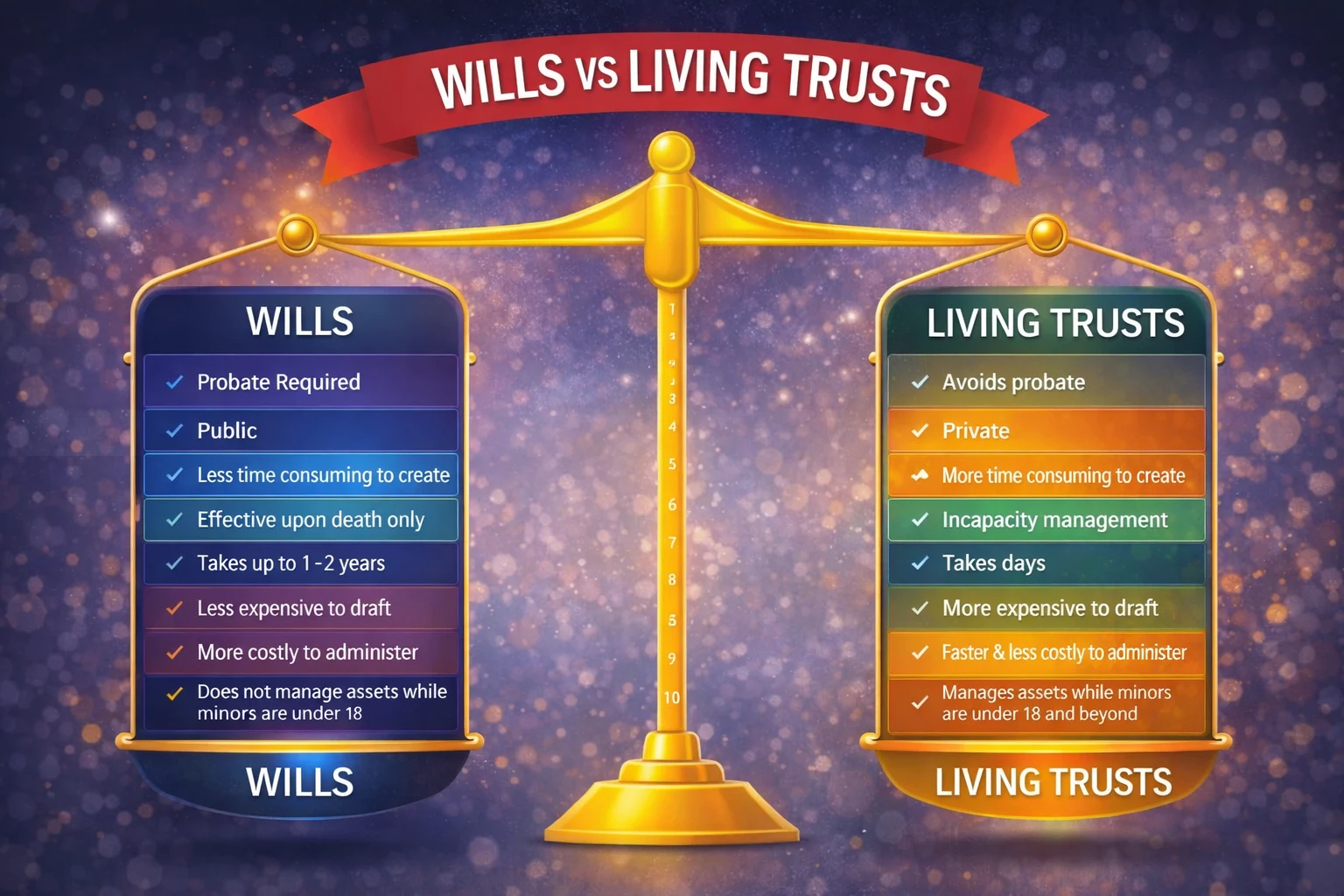
Still, in will vs estate planning, a will has limits. It doesn’t control assets with beneficiary designations, joint ownership, or many trust assets.
It also doesn’t avoid probate Florida, which can add time and court involvement for your family. A revocable living trust may address assets a will alone won’t transfer smoothly after death.
What Does a Full Estate Plan Include Beyond a Will?
Because a will handles only part of the job, a full estate plan usually includes several additional documents that protect you during life and make things easier for your family later.
You’ll often need a health care power of attorney, a financial power of attorney, and clear medical directives.
You may also review beneficiary designations, guardianship choices, and how account ownership affects what passes outside probate.
In estate planning vs will discussions, this broader preparation matters. A trust may also be part of your plan, depending on your goals.
A solid will and estate planning checklist helps you organize decisions and spare your loved ones stress.
Will vs Trust vs Estate Plan: Which Do You Actually Need?
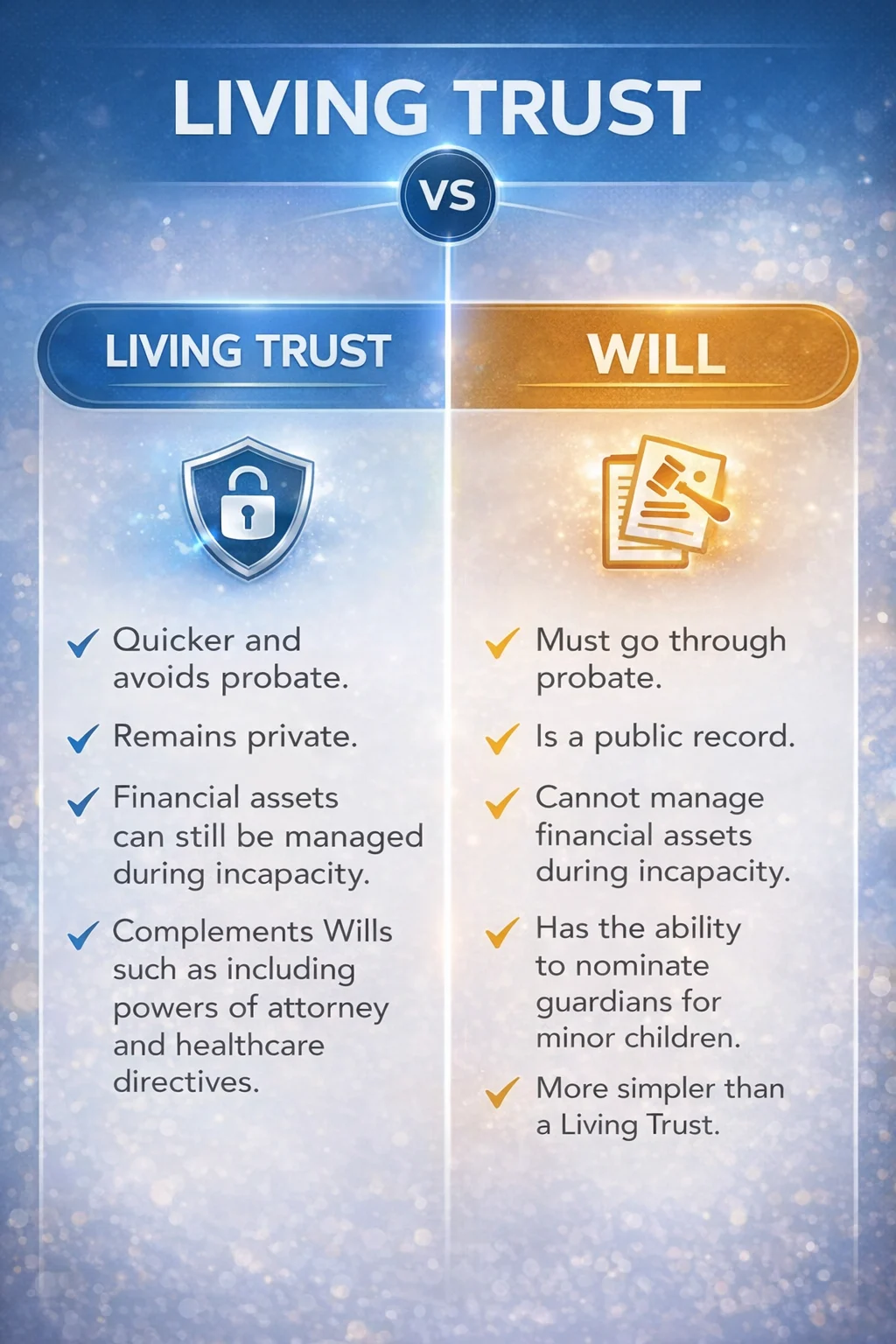
Which option do you actually need—a will, a trust, or a full estate plan? If you’re evaluating will vs trust Florida families often choose based on assets, privacy, and complexity.
A will names guardians and directs property, but it doesn’t avoid probate. A trust can, and an irrevocable trust may help with specific protection goals.
When comparing estate planning vs will, remember a full plan also covers incapacity and decision-making.
Your choice shouldn’t come down to diy will vs attorney alone. Ask how much does estate planning cost in Florida, then measure cost against peace of mind and your family’s long-term needs and goals.
What Are the Biggest Mistakes People Make with Wills in Florida?
Even if you decide a will is the right starting point, common mistakes can still leave your family with delay, confusion, and added expense in Florida probate.
You might assume a will covers everything, but that’s often what’s the biggest mistake with wills: failing to coordinate beneficiary designations, assets, and updates after life changes.
In the will vs estate planning conversation, remember a will doesn’t avoid probate.
In estate planning vs will Florida decisions, you should also name the right personal representative, follow signing rules, and review your plan regularly.
A probate attorney Tampa families trust can help you avoid costly gaps.
What Is the 5 by 5 Rule in Estate Planning — and Does It Apply to You?
What does the 5 by 5 rule mean in estate planning, and when should you pay attention to it? In many trusts, it lets a beneficiary withdraw the greater of $5,000 or 5% of trust assets each year.
The 5 by 5 rule estate planning can affect taxes, control, and how assets pass to family.
If you’re comparing estate planning vs will, this rule usually matters only with trusts, not simple wills.
As you weigh will vs estate planning pros and cons and ask what’s estate planning vs will, remember trust terms shape flexibility.
You may also wonder how much does estate planning cost overall.
Why Work with a Tampa Estate Planning Attorney Instead of Using a DIY Will?
While a DIY will may seem like the cheaper, faster option, it often leaves out the planning tools that help protect your family, avoid probate problems, and carry out your wishes clearly under Florida law.
With estate planning, you don’t just answer will vs estate planning questions—you build a strategy for incapacity, guardianship, beneficiaries, and taxes.
A Wesley Chapel estate planning attorney helps you avoid costly mistakes and explains what’re the disadvantages of estate planning in plain terms.
If you’re asking, is it better to have a will or an estate, PJM attorney can tailor documents to your family, assets, and long-term goals.
Frequently Asked Questions
How Often Should I Update My Estate Plan After Major Life Changes?
You should update your estate plan after every major life change and review it every three to five years. Marriage, divorce, births, deaths, moves, or big financial shifts can make your current plan outdated quickly.
Can Estate Planning Help Protect Assets From Nursing Home Costs?
Yes, estate planning can help you protect some assets from nursing home costs if you plan early. You can use Medicaid-friendly strategies, trusts, and gifting rules to preserve more for your family legally.
What Happens to Digital Accounts and Online Passwords After Death?
Your digital accounts and passwords don’t automatically transfer after death. You need clear estate planning documents naming someone to access them legally, follow provider rules, secure assets, and protect your family from confusion.
How Can Blended Families Avoid Conflicts Through Estate Planning?
You can prevent blended-family conflicts by clearly naming beneficiaries, updating wills and trusts, defining inheritance timing, addressing stepchildren thoughtfully, and communicating your wishes early. You’ll reduce surprises, protect relationships, and give your family clearer expectations.
Should Young Parents Name Guardians and Trustees in Separate Documents?
Yes, you should often name guardians and trustees separately because you’re choosing different roles. You protect your children better when you match caregiving skills with money-management ability, and you can reduce family conflict through clear planning.
Conclusion
Choosing between a will, a trust, and a full estate plan depends on your family’s needs, your assets, and the future you want to protect. A will may cover the basics, but a complete estate plan gives you broader protection and clearer guidance. By planning now, you can reduce confusion, avoid costly mistakes, and give your loved ones peace of mind. Working with a Tampa estate planning attorney can help you create a plan that truly fits your life.